

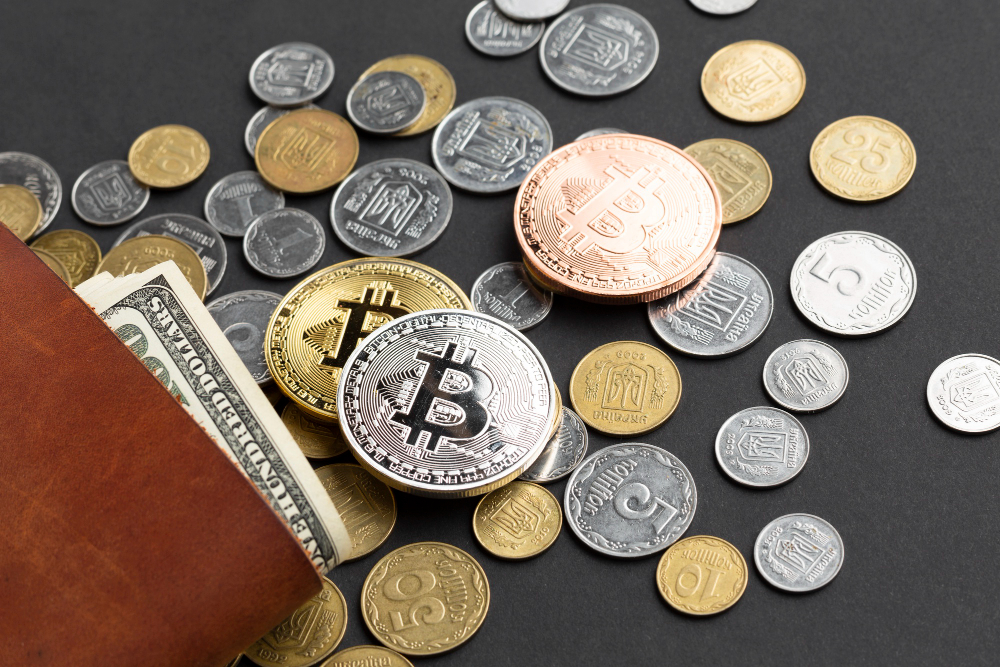
The cryptocurrency market experienced a difficult start to October 2026, with leading digital assets losing value. Bitcoin (BTC) fell by approximately 5%, while Ethereum (ETH) declined by around 10% during the first week of the month. Many assets among the top 100 cryptocurrencies also recorded significant losses.
However, some projects moved against the broader market trend. According to a report published by BanksNews.am on October 10, three cryptocurrencies—Starknet (STRK), Raydium (RAY), and LayerZero (ZRO)—recorded gains amid the downturn.
Their performance highlights how project-specific developments, network upgrades, trading activity, and tokenomics can influence cryptocurrency prices even when the wider market is under pressure.
1. Starknet (STRK): A 70% Weekly Increase
Starknet is a Layer-2 network designed to improve Ethereum's scalability. Developed by StarkWare Industries, the project has attracted investment from prominent industry participants, including Sequoia Capital and Coinbase, while Ethereum co-founder Vitalik Buterin has also been associated with its investor base.
According to the BanksNews.am report, STRK gained approximately 70% over seven days, making it the strongest performer among the three projects covered.
What Supported Starknet's Growth?
Several developments were highlighted in the report:
- Network improvements: An early-October upgrade aimed to increase the network's throughput.
- Bitcoin transaction fees: The project covered fees for the first 100 BTC transfers, according to the report.
- Quantum-resistant ambitions: On October 8, StarkWare co-founder Eli Ben-Sasson reportedly discussed plans for Starknet to move toward its own blockchain, with a stated goal of strengthening protection against potential quantum-computing threats by 2027.
The report placed STRK's price at approximately $0.075, with a market capitalization of around $560 million at the time. Despite its weekly gains, the token remained far below its February 2024 all-time high of $4.41.
These figures reflect the period covered by the original report and should not be treated as current market prices.
2. Raydium (RAY): A 25% Weekly Increase
Raydium is a decentralized exchange operating on the Solana blockchain. Its RAY token gained approximately 25% over seven days, according to the report.
One of the main factors highlighted was a significant increase in trading-related revenue.
Higher Revenue and Token Buybacks
BanksNews.am reported that Raydium generated approximately $7.5 million in revenue in September, compared with $1.4 million in August.
The report also noted that around $4.7 million was spent on RAY token buybacks in September, compared with approximately $400,000 in July.
Token buybacks can influence the relationship between a project's revenue and its circulating token supply. However, they do not guarantee price appreciation, and the effect depends on factors such as market demand, selling pressure, and the project's tokenomics.
Raydium's reported performance illustrates how increased activity within a decentralized finance ecosystem may coincide with positive price movements, even during a wider market decline.
3. LayerZero (ZRO): A 15% Weekly Increase
LayerZero is a cross-chain interoperability protocol designed to facilitate communication and the transfer of information and tokens between different blockchain networks.
The project has attracted investment from organizations including Andreessen Horowitz (a16z), Sequoia Capital, Circle, Samsung, and Tether. BanksNews.am reported that total investment exceeded $261 million.
ZRO gained approximately 15% over seven days during the period covered by the report.
Ecosystem Expansion and Tokenomics
Several developments may have contributed to investor interest in LayerZero:
- ATLAS infrastructure: LayerZero was developing ATLAS, a trading infrastructure project on its Zero blockchain, with a launch planned for autumn 2026.
- Token buybacks and burns: According to the report, 75% of the fees generated by ATLAS were intended to go toward buying back and burning ZRO tokens.
- Stargate integration: The conversion of Stargate (STG) tokens into ZRO began in September, and Binance completed the process on October 7, according to the report.
- Institutional adoption: The report stated that Anchorage Digital selected LayerZero to support connectivity between stablecoins.
These developments could affect the project's ecosystem and token economics. Nevertheless, their long-term impact depends on actual adoption, implementation, market conditions, and the amount of demand for ZRO.
A Potential Risk: Token Unlocks
The report also highlighted a potential source of selling pressure: approximately $200 million worth of ZRO tokens were expected to be unlocked in October 2026.
Token unlocks increase the amount of tokens that may become available to holders. They do not automatically lead to selling, but investors often monitor unlock schedules because newly available tokens can affect market supply and price volatility.
What Can Investors Learn From These Market Movements?
The performance of Starknet, Raydium, and LayerZero demonstrates that cryptocurrency prices do not always move in the same direction.
During periods of market weakness, individual projects may benefit from technological upgrades, increased network activity, revenue growth, ecosystem expansion, or changes to token supply.
However, short-term price increases should not be interpreted as proof of long-term value. Rapid gains can be followed by sharp corrections, particularly in the altcoin market.
Before considering a cryptocurrency, investors should research several factors:
- Project fundamentals: Understand the technology, use case, development roadmap, and competitive position.
- Market capitalization and liquidity: These help provide context for price movements and trading conditions.
- Tokenomics: Review token supply, unlock schedules, buyback mechanisms, and token distribution.
- Real adoption: Consider whether network usage and demand are growing sustainably.
- Risk exposure: Only invest amounts you can afford to lose, and avoid making decisions based solely on recent price increases.
Final Thoughts
Starknet, Raydium, and LayerZero stood out during the October 2026 market downturn, recording reported weekly gains of approximately 70%, 25%, and 15%, respectively.
Their performance was associated with different factors, including network upgrades, increased revenue, ecosystem developments, and token-related mechanisms. At the same time, risks such as token unlocks and broader market volatility remained important considerations.
For anyone following the crypto market, these projects offer a useful reminder: understanding the reasons behind a price movement is more valuable than simply chasing the assets that have risen the most.
Explore Crypto With OurExchangeClub
OurExchangeClub helps users explore cryptocurrency markets and exchange digital assets. Before making any transaction, research the asset, understand the risks, and verify the details of your exchange.
Disclaimer: This article is for informational and educational purposes only. It is not financial or investment advice. Cryptocurrency prices are volatile, and past performance does not guarantee future results.
Source:BanksNews.am — original report on cryptocurrencies rising during the market decline
