

Global investment giant BlackRock has taken another major step in the digital asset industry by expanding its tokenized money market funds into the European market. The move reflects the growing interest among traditional financial institutions in using blockchain technology to modernize investment products and improve capital efficiency.
As tokenization continues to reshape global finance, BlackRock's latest initiative highlights how blockchain is increasingly becoming part of mainstream financial infrastructure rather than a niche technology.
Bringing Traditional Finance On-Chain
Money market funds have long been considered one of the safest investment products, typically investing in short-term government securities and highly liquid financial instruments.
By bringing these funds on-chain, BlackRock enables digital ownership and more efficient management of fund shares using blockchain technology.
Instead of relying entirely on traditional financial systems, tokenized fund shares can be recorded, transferred, and managed through distributed ledger technology, opening the door to faster settlement and improved transparency.
What Is Tokenization?
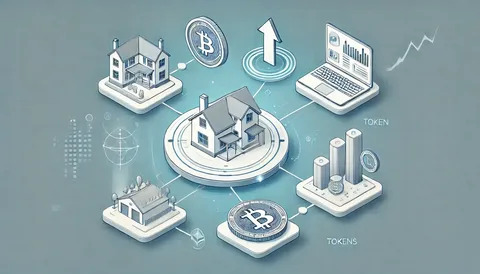
Tokenization is the process of converting ownership rights to real-world assets into digital tokens recorded on a blockchain.
Rather than replacing traditional financial products, tokenization creates a blockchain-based representation of existing assets.
Today, tokenization is expanding beyond cryptocurrencies and includes:
- government bonds;
- money market funds;
- real estate;
- private equity;
- commodities;
- investment funds.
Many financial experts believe tokenized assets could become one of the fastest-growing sectors within global finance over the coming years.
Why Europe?
Europe has become an increasingly attractive market for digital asset innovation thanks to its evolving regulatory framework.
The introduction of the Markets in Crypto-Assets (MiCA) regulation has provided greater legal clarity for companies developing blockchain-based financial products.
By expanding into Europe, BlackRock positions itself to serve institutional investors seeking regulated exposure to tokenized financial instruments.
The move also demonstrates growing confidence in Europe's digital asset ecosystem.
Why Institutional Investors Are Interested
Large financial institutions are increasingly exploring blockchain technology because of several potential advantages.
Tokenized investment products may offer:
- faster settlement times;
- improved transparency;
- reduced operational costs;
- increased market accessibility;
- programmable financial assets;
- enhanced liquidity management.
These benefits could significantly improve how traditional investment products are issued, transferred, and managed.
Blockchain Continues to Enter Traditional Finance
BlackRock is not the only global financial institution exploring blockchain technology.
Banks, asset managers, and payment companies worldwide are investing in tokenization as they seek more efficient ways to manage financial assets.
Rather than viewing blockchain solely as the technology behind cryptocurrencies, many institutions now see it as infrastructure capable of modernizing capital markets.
The increasing participation of major financial firms continues to strengthen confidence in blockchain adoption across traditional finance.
What This Means for the Crypto Industry
BlackRock's European expansion demonstrates that blockchain technology is increasingly being used beyond cryptocurrency trading.
As more real-world assets become tokenized, blockchain networks could play a larger role in global financial markets.
This trend may encourage additional institutional participation while helping bridge the gap between traditional finance and digital assets.
Although cryptocurrency markets remain volatile, tokenization represents one of the industry's fastest-growing long-term opportunities.
Why This Matters
The expansion of BlackRock's tokenized money market funds into Europe is another sign that blockchain technology is steadily becoming part of mainstream finance.
Instead of replacing traditional financial institutions, blockchain is increasingly being integrated into existing investment infrastructure to improve efficiency, transparency, and accessibility.
As institutional adoption accelerates, tokenized real-world assets could become one of the defining trends shaping the future of global finance.
